
Climate Goals

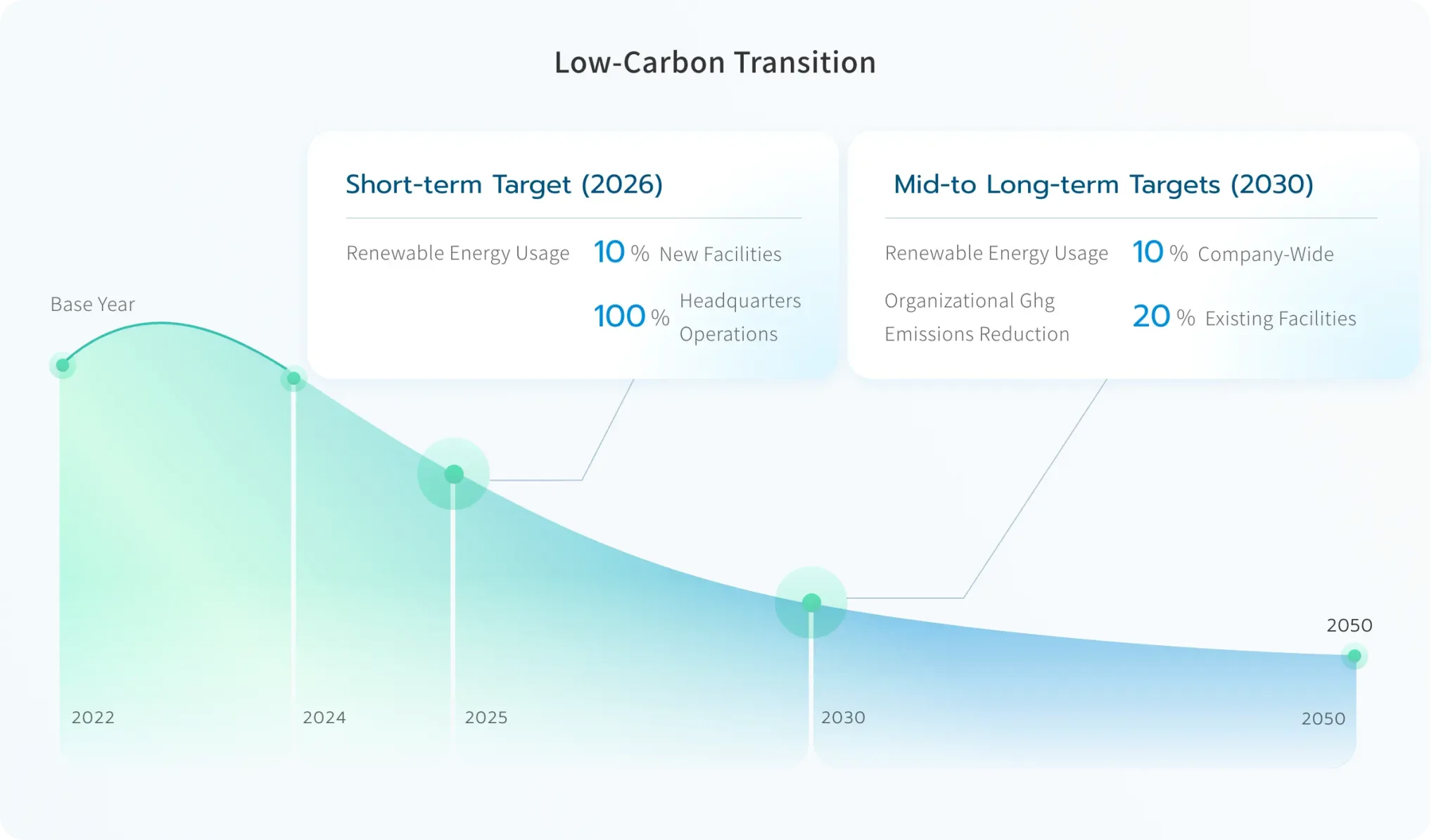
Low-Carbon Transition Pathway
Phase 1
01
Energy Efficiency and Carbon Reduction
This phase focuses on establishing foundational carbon management capabilities, including greenhouse gas inventory and emissions data management. In alignment with international standards, the Company has developed a comprehensive inventory system to identify major emission sources and structures under Scope 1 and Scope 2.
Following the establishment of baseline emissions data, Daxin has progressively implemented energy and carbon management mechanisms. Through equipment energy-saving improvements, process efficiency enhancements, and energy optimization initiatives, the Company reduces energy consumption per unit of product and operational carbon intensity.
Phase 2
02
Low-Carbon Energy Deployment
This phase focuses on expanding the use of low-carbon energy and improving operational efficiency. Based on facility conditions and operational needs, the Company evaluates the adoption of process optimization technologies to continuously enhance energy efficiency.
Through diversified renewable energy strategies, including green electricity procurement and Renewable Energy Certificates (RECs), Daxin progressively increases its renewable energy usage, thereby reducing Scope 2 emissions. These efforts are implemented while balancing cost efficiency and power supply stability to ensure a steady low-carbon transition.
Phase 3
03
Integrated Net-Zero Transition
In its long-term development roadmap, the Company will continue to strengthen its low-carbon operating model by integrating energy and resource circularity mechanisms to improve overall resource efficiency and incorporate circular economy principles into process management.
Looking ahead, Daxin will evaluate the adoption of emerging low-carbon or net-zero technologies based on technological maturity and market mechanisms. Carbon credits or carbon offset mechanisms will be considered as supplementary tools to further reduce residual emissions, in support of the global goal of achieving net-zero emissions by 2050.
2025 Low-Carbon Transition Performance
Scope 1

Scope 1
Climate Action
- Adoption of Low-GWP Refrigerant
- HFC Management and Control
GHG Emissions Reduction
589tCO₂e
Scope 2

Scope 2
Climate Action
- Energy-Efficient Equipment
- Operational Optimization
- Renewable Energy
Annual Electricity Savings Rate
2.1%
Renewable Energy Share
2.5%
GHG Emissions Reduction
296tCO₂e
Scope 3

Scope 3
Climate Action
- Recycling and Reuse of Waste Solvents
- Polyimide Recycling and Circular Utilization
- Process By-product Recovery and Valorization
Waste Solvent Recycling Rate
94%
GHG Emissions Reduction
1,132tCO₂e
Climate Action Commitment
The Company, based on stable operations, prudently and pragmatically establishes its short-term (2025) and mid- to long-term (2030) climate action commitments, and promotes carbon reduction through systematic management and innovative technologies. Each year, energy-saving initiatives are continuously tracked and managed, while investments are made in solar power installations, green electricity procurement, and the adoption of low-carbon refrigerant technologies. These efforts progressively reduce operational carbon intensity and support the achievement of phased climate targets.
2025 Greenhouse Gas Emissions Reduction Achievements
Scope 1 Emissions Reduction
589tCO₂e

Scope 2 Emissions Reduction
296tCO₂e

Scope 3 Emissions Reduction
1,132tCO₂e

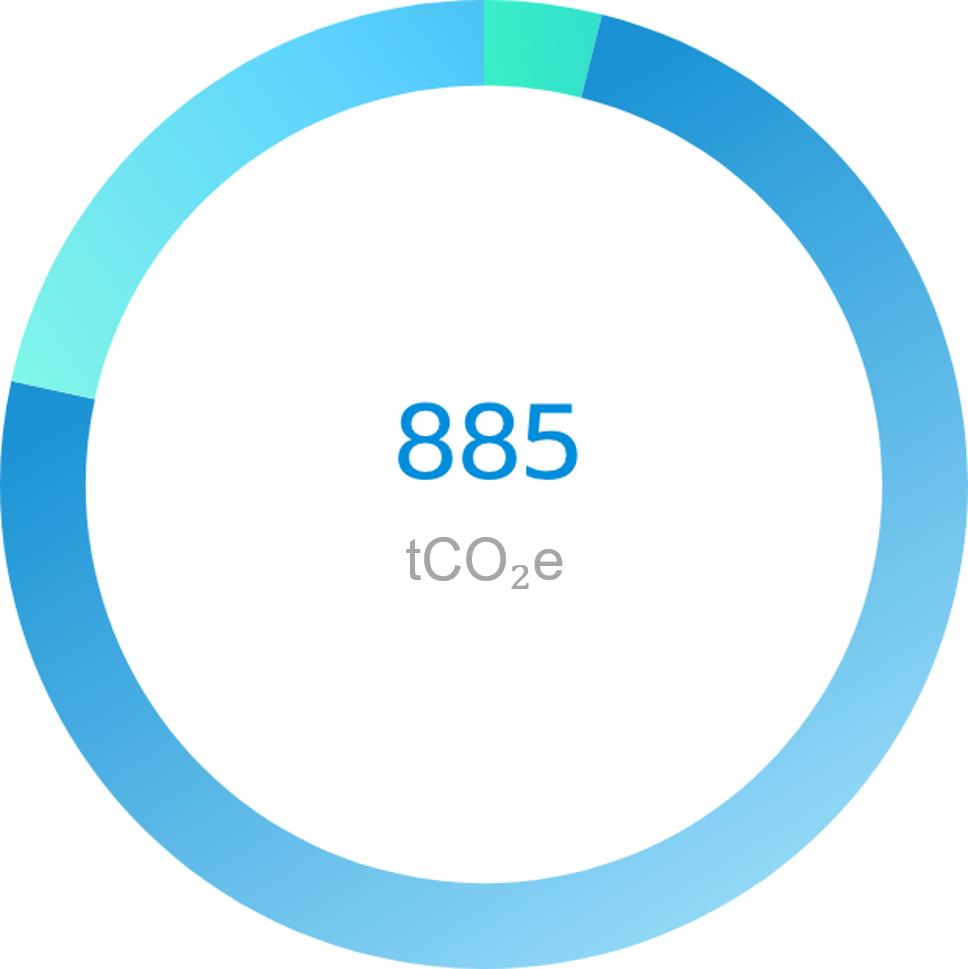
Energy-Saving Measures 136 tCO₂e
Renewable Energy 160 tCO₂e
Low-Carbon Refrigerants 589 tCO₂e
Organizational Boundary Daxin Materials
Carbon Emissions 6,812tCO₂e
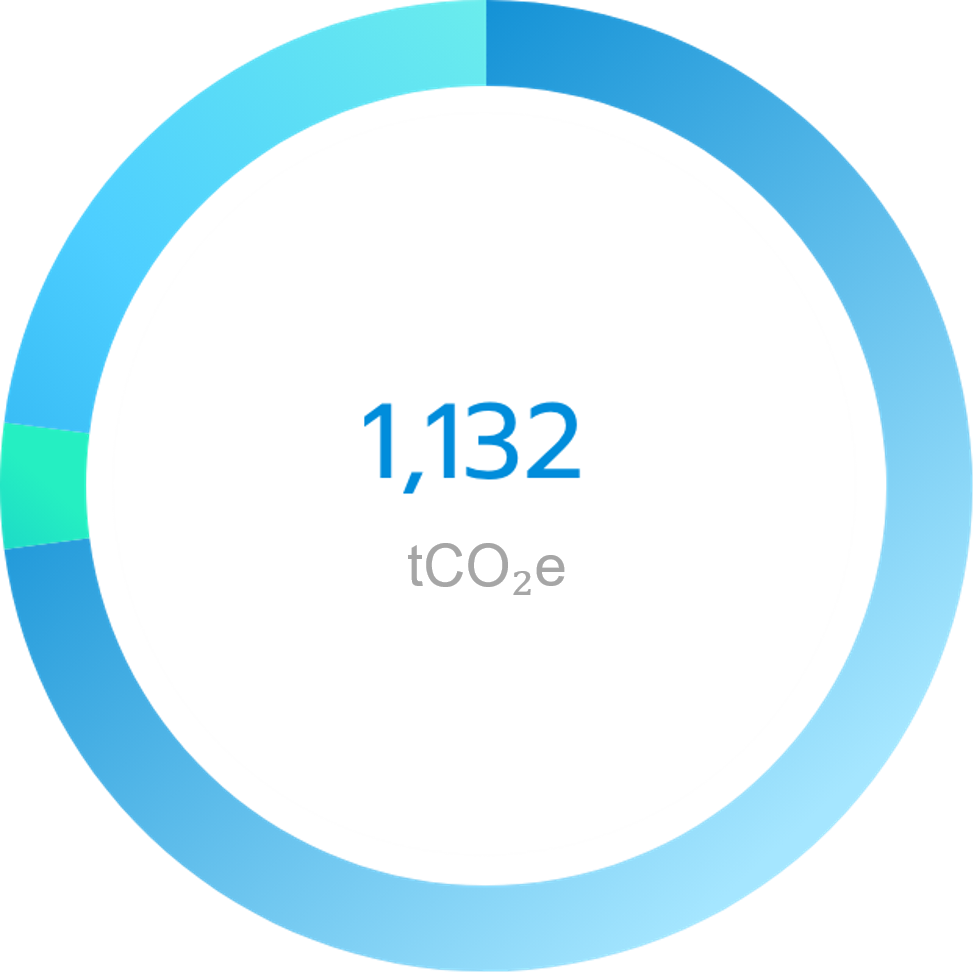
Waste Solvent Recycling and Reuse 909 tCO₂e
By-product Resource Utilization 145 tCO₂e
Resource Circularity Projects 78 tCO₂e
Value Chain Boundary Green Value Chain
Carbon Emissions 20,003tCO₂e